
Patient gantry hoists are a portable alternative to ceiling mounted systems. Mobile (gantry) hoist are…
Floor Hoist & Gantry Hoist Comparison
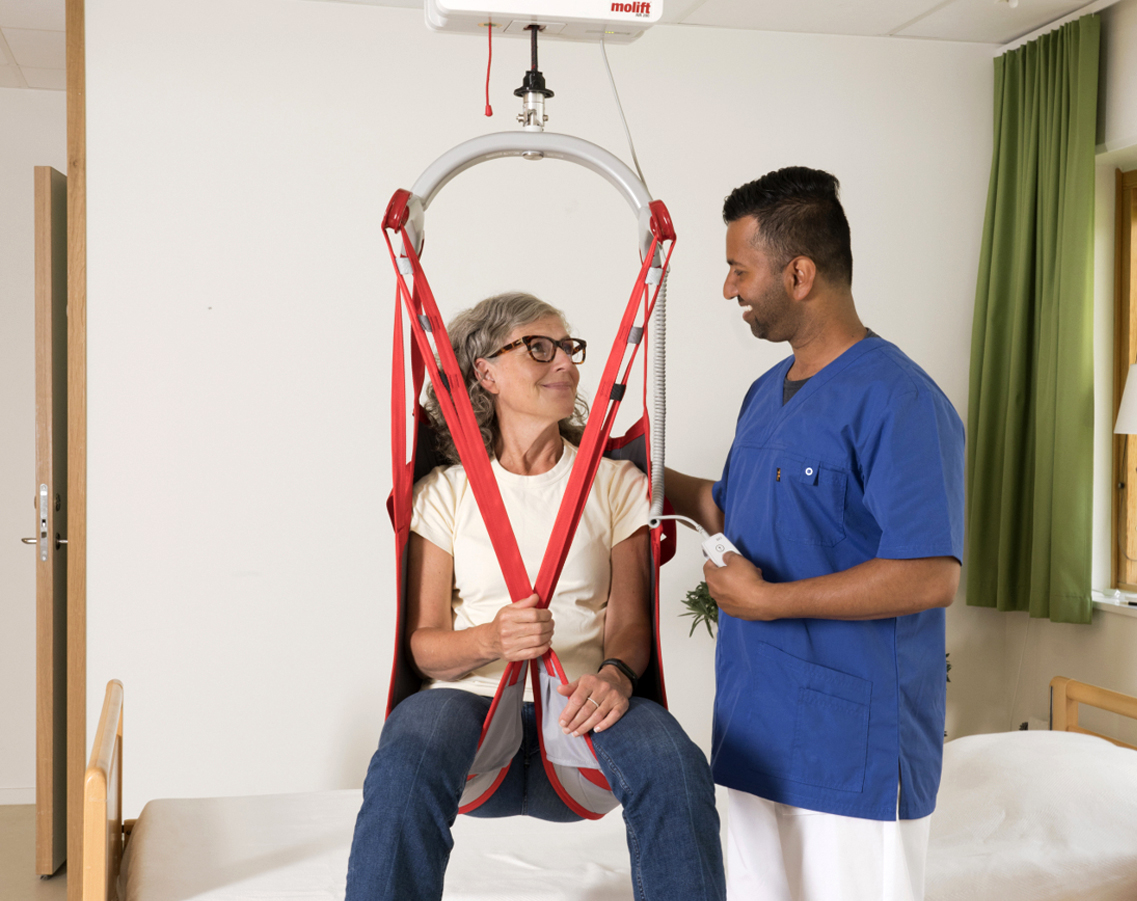
Floor Hoist & Gantry Hoist Comparison – The right patient transfer solution ultimately comes down to what’s most suitable for the individual. Often however, there are other factors that may need consideration. Like funding, environment (floor space and if a temporary care location) and equipment to equipment transfer.
In this article we focus on the comparison of gantry hoists and floor hoists. Each hoist system offers their own advantages and differs in their primary use, including installation and space usage. It’s important to note, it’s not about what one is better, but what is best for the individual to cater for their needs and care environment.
Offering portability and lower costs, floor hoists are an ideal option for temporary use. Gantry hoists have no need for permanent fixings to walls or ceilings, however do require assembly. Once installed, a gantry hoist offers greater accessibility by eliminating floor clutter. This provides easier and safer transfer in tight spaces.
The best option will be determined by assessing the individual’s weight, care environment (available floor space for example) and if the solution is required temporarily or permanently.
Key Comparisons
Floor Hoists:
Installation: None required, freestanding portable equipment.
Portability: Mobile, on wheels and freestanding allowing for room-to-room transport in some care scenarios. It is important to note, transferring an individual in a hoist from room to room is most often not recommended.
Required Space: Significant floor space is needed for manoeuvring because of the base and legs of the unit.
Disadvantages: More physical effort to move the individual. Floor Hoist legs take up floor space and make maneuvering more difficult. The legs of the unit can also interfere with equipment like wheelchairs and beds, preventing ideal positioning. Often limiting positioning of the individual from equipment to equipment. Floor Hoists can prove difficult for Carers and can often lead to a reduced number of transfers. This greatly impacts the best care practice for the individual.
Advantages: Floor hoists will generally come with a lower hire and purchase cost. No installation is required. They are perfect for temporary needs where the individual doesn’t need a longer-term transfer solution. Or when the care environment does not allow for structural or permanent changes.
Gantry Hoists:
Installation: Minimal installation required. Freestanding units that require no permanent structural fixings. Due to safety requirements, units must be installed by Qualified Installers.
Portability: Fixed in place when in use. Can be easily dismantled and reinstalled.
Required Space: Minimal floor obstruction, legs of the frame the only section taking up floor space.
Disadvantages: Greater hire and purchase cost compared to a floor hoist. Although installation is minimal, it is still required. Transport of parts to location and through the care environment for installation may present a logistic challenge.
Advantages: Offers greater stability and safety for the individual and carer. Allows for improved positioning of the individual from equipment to equipment because of the greater clearance and access. Best use for longer-term care or in a permanent space where structural fixings are not an option.
Linear vs Arc Lifting:
Linear (Gantry Hoists) and arc lifting (Floor Hoist) are the two primary mechanisms in patient hoists. They have a significant difference in how they lift and move an individual, affecting patient comfort, caregiver workload and space requirements.
Linear Lifting (Vertical/Straight)
Action: A straight vertical lift (or near vertical) action, hoisting the individual straight up and down. Providing a stable controlled direct movement that enables precise positioning, especially useful when transferring someone with complex seating needs.
Arc or Pivot Lifting (Curved/Rotating)
Action: A curved swinging arc means both vertical and horizontal position of the individual moves as the hoist operates up and down. This action requires increased precision and carer control in operation to achieve correct transfer positioning.
Summary:
A mobile hoist offers versatility for varied room layouts. Although not recommended, a mobile hoist can provide a room-to-room manoeuvrable option in some scenarios. A gantry hoist system provides a clear floor alternative offering better support and safety for more challenging transfers.
Ultimately the lift and transport needs of the individual must be the primary consideration. Weighing up the long-term benefits of a fixed, highly efficient gantry set up. Against the immediate, go-anywhere convenience of a portable floor hoist unit.
Related Posts